
Automation Application Finishing System
In today’s fast-paced printing and packaging industry, businesses are constantly looking for smarter ways to improve productivity, reduce manual labor, and deliver flawless finishing results. An Automation Application Finishing System is designed to streamline post-printing processes while maintaining high precision and consistent quality.
From lamination and UV coating to cutting, folding, binding, and packaging, automation has completely transformed the finishing stage of printing production. Companies using advanced finishing systems can achieve faster turnaround times, lower operational costs, and better customer satisfaction.
What is an Automation Application Finishing System?
An Automation Application Finishing System is a modern machine setup that automates various finishing operations used after printing. These systems reduce manual intervention and improve efficiency by integrating intelligent controls, sensors, and high-speed automation technologies.
The finishing process may include:
- Laminating
- Die-cutting
- Folding
- Binding
- UV coating
- Foil stamping
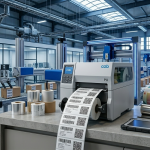
- Label finishing
- Packaging preparation
Automated finishing systems are widely used in commercial printing, packaging industries, label production, publishing houses, and digital printing applications.
Importance of Automation in Print Finishing
Automation helps printing businesses stay competitive by increasing production speed and reducing human error. Traditional finishing methods often require more labor and time, which can lead to inconsistencies and production delays.
With automation, companies can:
- Improve production workflow
- Reduce material wastage
- Increase finishing accuracy
- Deliver high-volume jobs faster
- Maintain consistent quality
- Lower operational costs
Modern automation systems are especially useful for industries handling bulk printing orders and customized packaging solutions.
Key Features of Modern Finishing Systems
1. High-Speed Production
Automation systems are capable of processing thousands of sheets or labels per hour, helping businesses complete projects within tight deadlines.
2. Precision Control
Advanced sensors and computerized controls ensure accurate cutting, folding, and alignment throughout the finishing process.
3. User-Friendly Interface
Most modern systems come with touchscreen control panels and programmable settings, making operation simple and efficient.
4. Reduced Manual Labor
Automation minimizes the need for multiple operators, reducing labor dependency and improving workplace productivity.
5. Multi-Function Capability
Many finishing systems combine several applications into one machine, saving space and improving workflow efficiency.
Applications of Automation Finishing Systems
Automation finishing technology is used across multiple industries, including:
Commercial Printing
Used for brochures, catalogs, magazines, books, and marketing materials.
Packaging Industry
Ideal for cartons, labels, flexible packaging, and product boxes.
Label Printing
Provides precise finishing for barcode labels, product stickers, and branding labels.
Publishing Industry
Automates book binding, trimming, and cover finishing.
Digital Printing
Supports fast and customized short-run printing jobs.
Benefits of Automated Finishing Solutions
Improved Productivity
Automated systems complete jobs faster than manual operations, helping businesses increase overall output.
Better Quality Consistency
Automation eliminates common finishing errors and ensures uniform results in every batch.
Cost Efficiency
Reduced wastage and lower labor costs contribute to higher profitability.
Faster Turnaround Time
Businesses can handle urgent printing orders more effectively with automated workflows.
Enhanced Customer Satisfaction
High-quality finishing creates a premium appearance and improves brand presentation.
Industries Benefiting from Automation Application Finishing Systems
Several industries now depend heavily on automated finishing solutions:
- Printing and Publishing
- Packaging Manufacturers
- Advertising Agencies
- Pharmaceutical Packaging
- Food & Beverage Labels
- Retail Branding
- Educational Printing Services
As customer expectations continue to rise, automation becomes essential for maintaining production quality and meeting delivery deadlines.
Future of Print Finishing Automation
The future of print finishing is driven by smart technologies such as AI integration, IoT monitoring, robotic handling, and cloud-based production management. These innovations allow businesses to monitor machine performance in real-time and optimize production efficiency.
Upcoming trends include:
- Smart factory integration
- Touchless workflow automation
- AI-based quality inspection
- Energy-efficient machinery
- Remote monitoring systems
Companies investing in advanced automation solutions today will gain a competitive advantage in the evolving print industry.
Why Choose Advanced Automation Finishing Solutions?
Businesses looking to improve efficiency and production quality should invest in reliable automation finishing systems. Advanced machinery not only boosts output but also helps companies maintain consistency across all projects.
Whether you operate a commercial print shop or a large-scale packaging facility, automation technology can help streamline operations and maximize profitability.
For high-performance printing and finishing solutions, visit Print Process and explore innovative printing technologies designed for modern production needs.
Conclusion
Automation Application Finishing Systems are revolutionizing the printing and packaging industry by delivering speed, precision, and efficiency. As businesses continue to demand faster production and superior quality, automated finishing solutions have become an essential part of modern manufacturing.